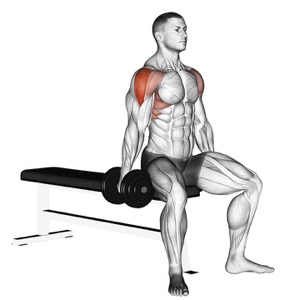
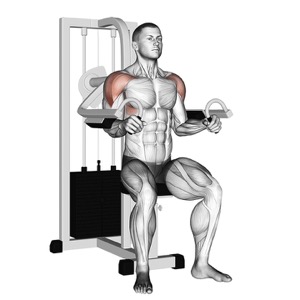
IsolationDumbbell
Dumbbell Lateral Raise

Exercise Details
Training Volume by Goal
Hypertrophy
Muscle Growth
3–4 sets × 12–15 reps (50–70% 1RM, RPE 6–7)
Strength
Max Power
3–4 sets × 10–12 reps (60–75% 1RM, RPE 6–8)
Endurance
Stamina
2–3 sets × 15–20 reps (30–50% 1RM, RPE 5–7)
📋How to Perform
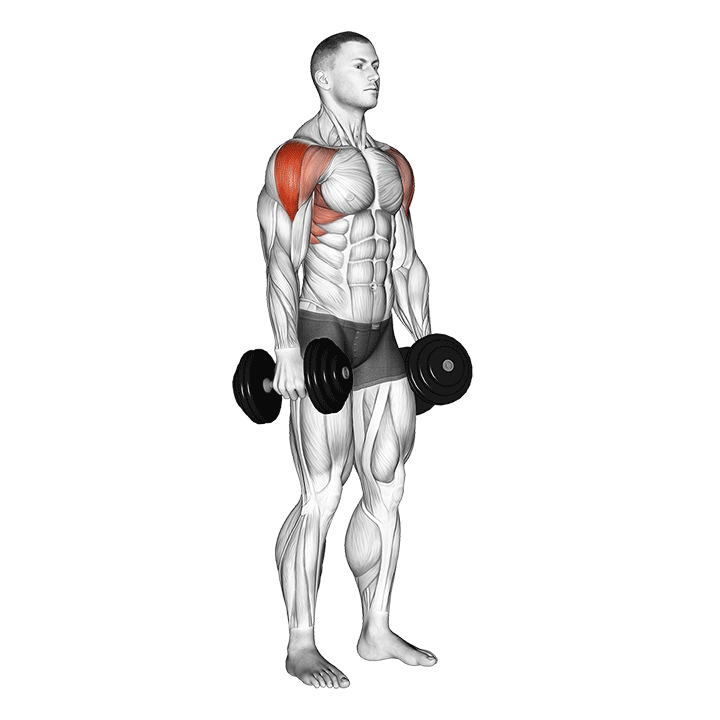
- Stand with feet shoulder-width apart holding dumbbells
- Let dumbbells hang at your sides with palms facing in
- Keep a slight bend in your elbows
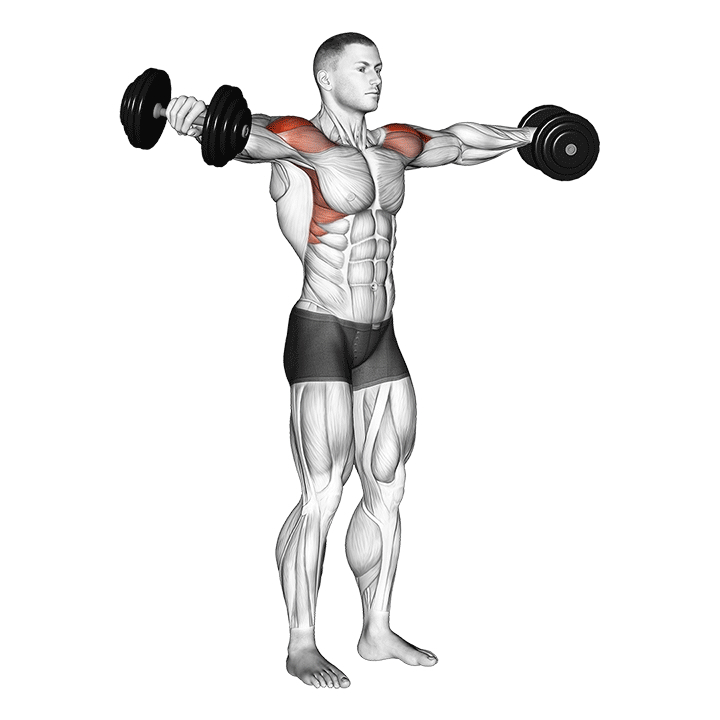
- Raise both dumbbells out to the sides simultaneously
- Lead with your elbows, not your hands
- Raise until arms are parallel to the floor
- Pause at the top and squeeze your side deltoids
- Slowly lower back to starting position with control
💡Coaching Cues
- ✓
Raise to shoulder height
- ✓
Lead with elbows
- ✓
Squeeze side delts at top
- ✓
Control descent
- ✓
Slight elbow bend throughout
- ✓
No momentum
⚠️Common Mistakes
- ✗
Raising too high above shoulders
- ✗
Using momentum or swinging