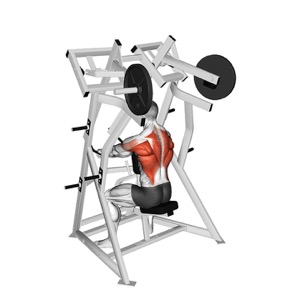
3–4 sets × 8–12 reps (60–75% 1RM, RPE 6–8)
4–5 sets × 6–8 reps (65–80% 1RM, RPE 6–8)
2–3 sets × 12–15 reps (50–70% 1RM, RPE 6–7)
Keep your back flat and strong throughout - rounding your lower back can cause serious injury
Pull the bar to your lower chest (sternum area) for optimal mid-back engagement
Squeeze your shoulder blades together as hard as possible at full contraction
Hold the peak contraction for 1 full second to maximize muscle activation
Control the descent slowly, taking 2-3 seconds to maintain constant tension
Maintain your hip hinge position at approximately 45 degrees throughout the set
Rounding your lower back during the movement - this is extremely dangerous and can cause injury
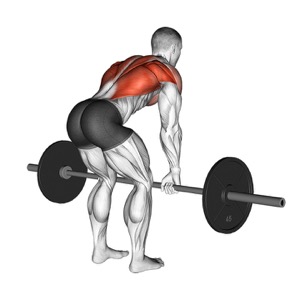

3–4 sets × 8–12 reps (60–75% 1RM, RPE 6–8)
4–5 sets × 6–8 reps (65–80% 1RM, RPE 6–8)
2–3 sets × 12–15 reps (50–70% 1RM, RPE 6–7)
Keep your back flat and strong throughout - rounding your lower back can cause serious injury
Pull the bar to your lower chest (sternum area) for optimal mid-back engagement
Squeeze your shoulder blades together as hard as possible at full contraction
Hold the peak contraction for 1 full second to maximize muscle activation
Control the descent slowly, taking 2-3 seconds to maintain constant tension
Maintain your hip hinge position at approximately 45 degrees throughout the set
Rounding your lower back during the movement - this is extremely dangerous and can cause injury
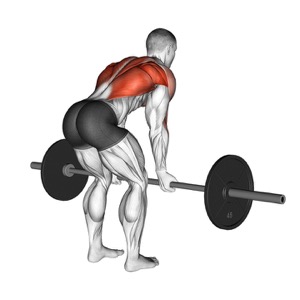
Standing too upright which changes the exercise angle and reduces back engagement
Not achieving full range of motion by not pulling high enough or not lowering fully
Using momentum or jerking the weight instead of smooth, controlled pulling
Not squeezing your shoulder blades together at the top - missing the key mid-back contraction
Moving too quickly through repetitions - reduces muscle tension and effectiveness
Standing too upright which changes the exercise angle and reduces back engagement
Not achieving full range of motion by not pulling high enough or not lowering fully
Using momentum or jerking the weight instead of smooth, controlled pulling
Not squeezing your shoulder blades together at the top - missing the key mid-back contraction
Moving too quickly through repetitions - reduces muscle tension and effectiveness
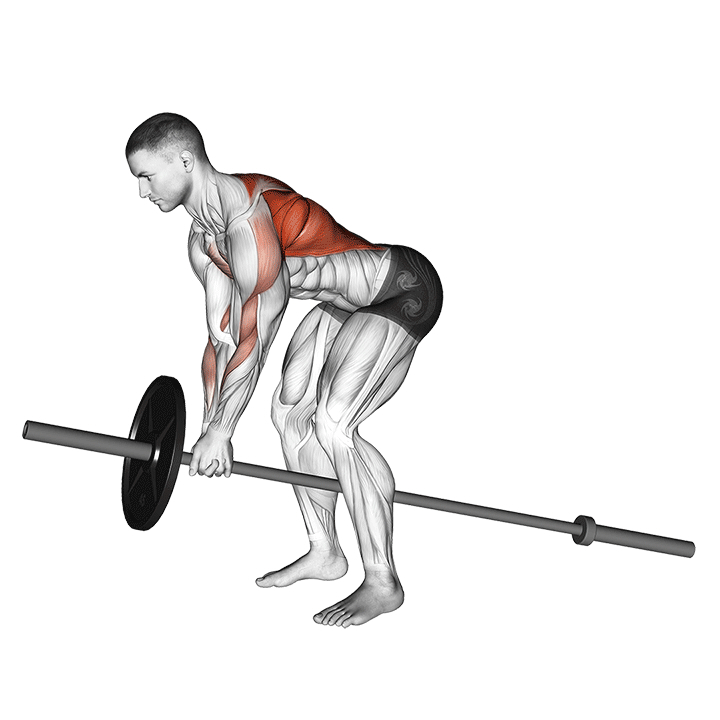
The bent over barbell row is a compound exercise that targets the mid-back, lats, and rhomboids. This rowing movement is excellent for building back thickness, improving posture, and developing overall pulling strength.
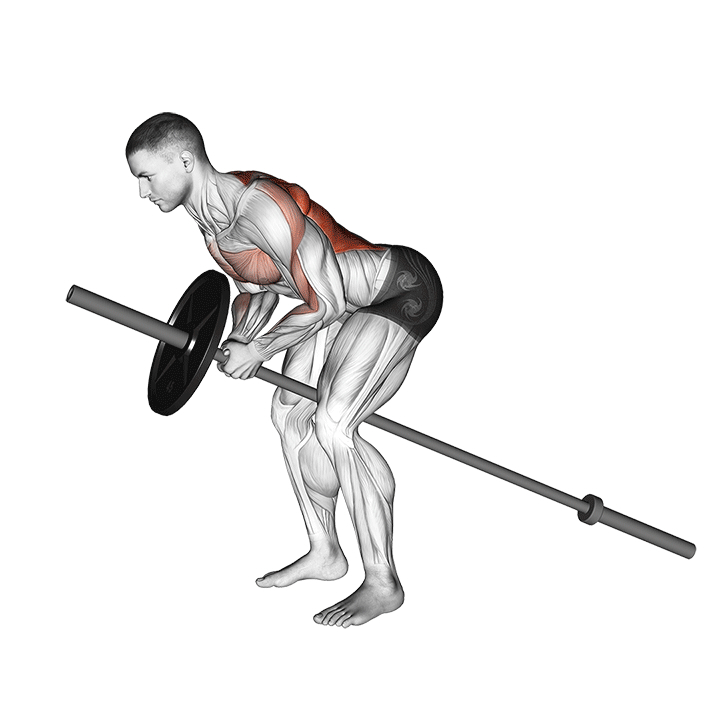
The reverse grip bent over barbell row is a compound exercise that targets the mid-back and lats with an underhand grip. This grip variation emphasizes the lower lats and biceps.
The seated cable row is a compound exercise that targets the lats, mid-back, and rhomboids with constant cable tension. This exercise is excellent for building back thickness, improving posture, and developing overall pulling strength.
The lever low row is a compound exercise that targets the mid-back and lats with a low pulling angle. The machine provides stability making it excellent for building back thickness.
The bent over barbell row is a compound exercise that targets the mid-back, lats, and rhomboids. This rowing movement is excellent for building back thickness, improving posture, and developing overall pulling strength.
The reverse grip bent over barbell row is a compound exercise that targets the mid-back and lats with an underhand grip. This grip variation emphasizes the lower lats and biceps.
The seated cable row is a compound exercise that targets the lats, mid-back, and rhomboids with constant cable tension. This exercise is excellent for building back thickness, improving posture, and developing overall pulling strength.
The lever low row is a compound exercise that targets the mid-back and lats with a low pulling angle. The machine provides stability making it excellent for building back thickness.