3–4 sets × 10–12 reps (60–75% 1RM, RPE 6–8)
4–5 sets × 8–10 reps (65–80% 1RM, RPE 6–8)
2–3 sets × 12–15 reps (50–70% 1RM, RPE 6–7)
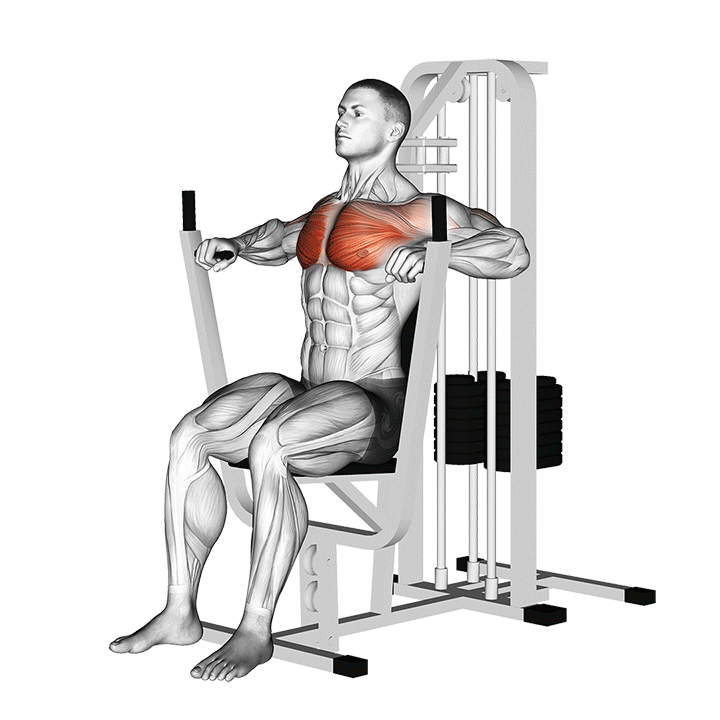
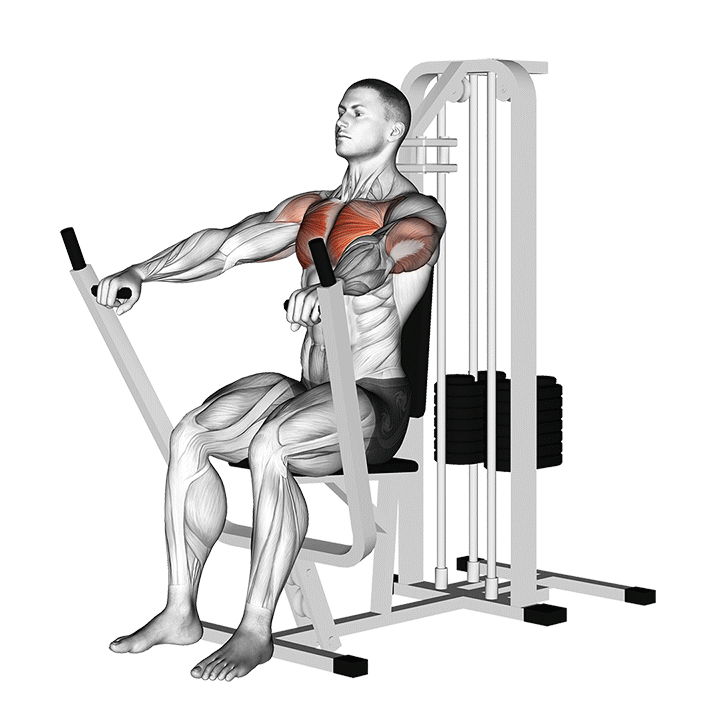
Press to full extension for complete chest contraction - don't stop short
Squeeze your chest as hard as possible at the top - this maximizes muscle fiber recruitment
Control the return over 2-3 seconds to build muscle - the negative phase is crucial
Keep your back pressed against the pad throughout - prevents shoulder injury
Keep your feet flat on the floor for stability and power transfer
Use smooth controlled motion throughout - no jerking or bouncing
Not achieving full arm extension - incomplete range of motion limits growth

3–4 sets × 10–12 reps (60–75% 1RM, RPE 6–8)
4–5 sets × 8–10 reps (65–80% 1RM, RPE 6–8)
2–3 sets × 12–15 reps (50–70% 1RM, RPE 6–7)
Press to full extension for complete chest contraction - don't stop short
Squeeze your chest as hard as possible at the top - this maximizes muscle fiber recruitment
Control the return over 2-3 seconds to build muscle - the negative phase is crucial
Keep your back pressed against the pad throughout - prevents shoulder injury
Keep your feet flat on the floor for stability and power transfer
Use smooth controlled motion throughout - no jerking or bouncing
Not achieving full arm extension - incomplete range of motion limits growth
Arching your back off the pad - this can cause lower back strain
Going too fast without controlling the movement - slower tempo is better for muscle building
Using too much weight that compromises form - ego lifting reduces effectiveness
Bouncing at the bottom of the movement - this reduces chest tension
Locking elbows too hard at the top - keep a slight bend to maintain chest tension
Arching your back off the pad - this can cause lower back strain
Going too fast without controlling the movement - slower tempo is better for muscle building
Using too much weight that compromises form - ego lifting reduces effectiveness
Bouncing at the bottom of the movement - this reduces chest tension
Locking elbows too hard at the top - keep a slight bend to maintain chest tension
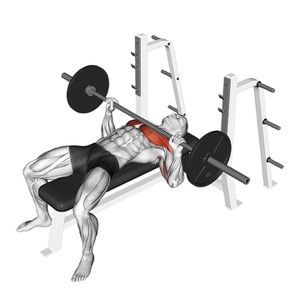
The barbell bench press is a premier upper-body compound lift that trains the chest, triceps, and shoulders. A stable setup—feet planted, shoulder blades pinned, and controlled bar path—makes it both stronger and safer.
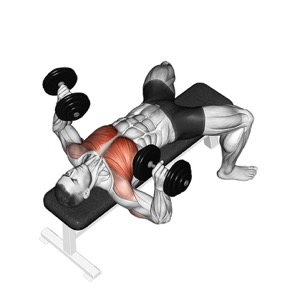
The dumbbell bench press is a compound exercise that targets the chest with independent arm movement. This exercise provides greater range of motion than barbell bench press and is excellent for chest mass development.
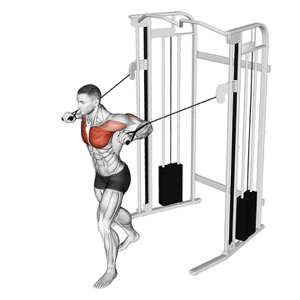
The cable chest press is a standing pressing movement performed between two cable stations. Because the cables keep tension through the full range of motion, it is excellent for controlled chest hypertrophy and for reinforcing stable shoulder mechanics.
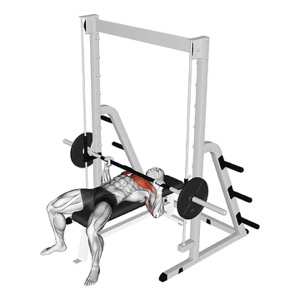
The Smith machine bench press is a compound exercise that targets the entire chest with a fixed bar path. The Smith machine provides stability and controlled movement, making it excellent for chest mass development.
The barbell bench press is a premier upper-body compound lift that trains the chest, triceps, and shoulders. A stable setup—feet planted, shoulder blades pinned, and controlled bar path—makes it both stronger and safer.
The dumbbell bench press is a compound exercise that targets the chest with independent arm movement. This exercise provides greater range of motion than barbell bench press and is excellent for chest mass development.
The cable chest press is a standing pressing movement performed between two cable stations. Because the cables keep tension through the full range of motion, it is excellent for controlled chest hypertrophy and for reinforcing stable shoulder mechanics.
The Smith machine bench press is a compound exercise that targets the entire chest with a fixed bar path. The Smith machine provides stability and controlled movement, making it excellent for chest mass development.