IsolationCable
Standing Cable Side Bend

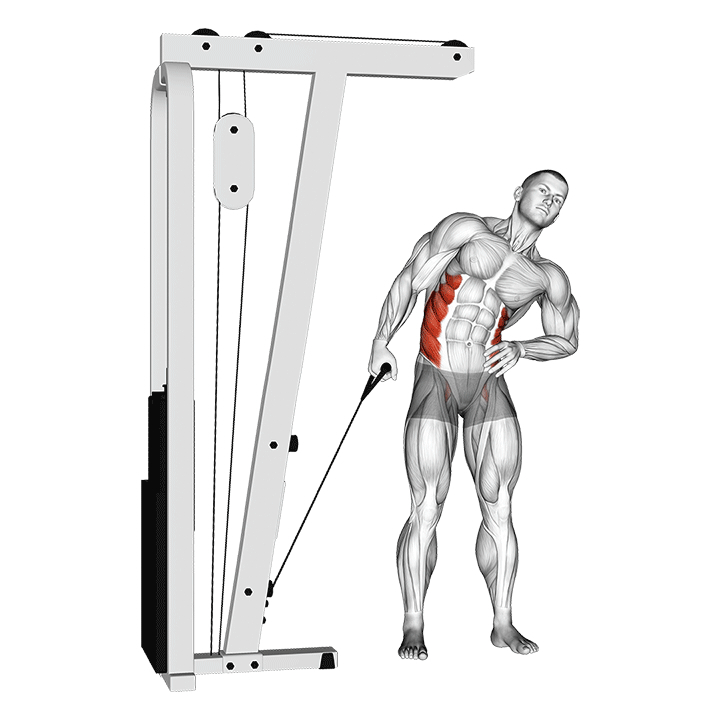
Exercise Details
Training Volume by Goal
Hypertrophy
Muscle Growth
3–4 sets × 12–15 reps per side (50–70% 1RM, RPE 6–7)
Strength
Max Power
3–4 sets × 10–12 reps per side (60–75% 1RM, RPE 6–8)
Endurance
Stamina
2–3 sets × 15–20 reps per side (30–50% 1RM, RPE 5–7)
📋How to Perform
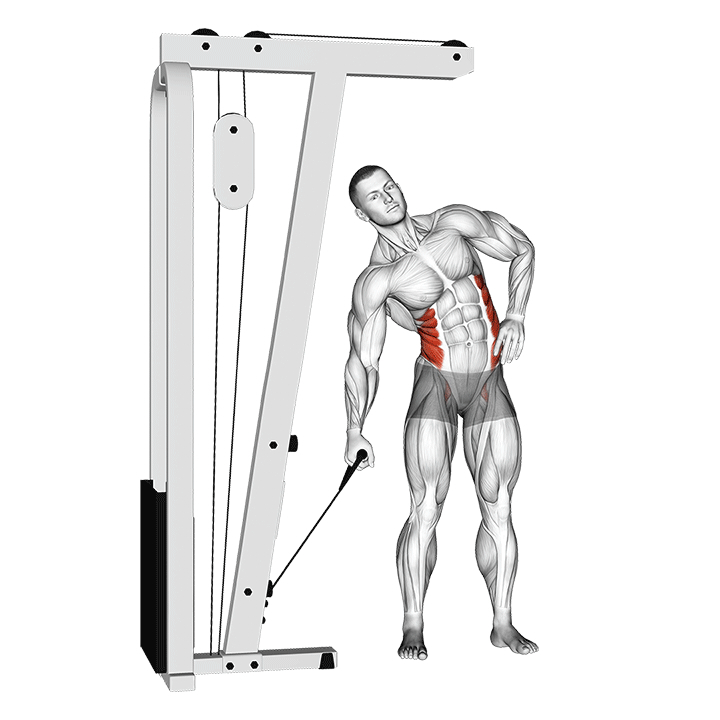
- Stand sideways to a low cable pulley with feet shoulder-width apart
- Grasp the cable handle with the hand closest to the machine
- Place your free hand behind your head or on your hip
- Stand upright with core engaged
- Bend sideways away from the cable as far as comfortable
- Focus on using your obliques to control the movement
- Return to starting position by contracting the obliques on cable side
- Keep movement strictly lateral - no twisting or leaning forward
💡Coaching Cues
- ✓
Strictly lateral movement
- ✓
Bend as far as comfortable
- ✓
Control with obliques
- ✓
No twisting
- ✓
Core stays tight
- ✓
Full range of motion
⚠️Common Mistakes
- ✗
Twisting torso instead of pure side bend
- ✗
Leaning forward or backward